

gasticatory perception : ค้นหาหนังสือธรรมะ
หน้าหนังสือทั้งหมด
246
Fundamental Concepts in Buddhist Psychology
rasa-saṅchetana (gasticatory volition: see sense volition)
rasa-saṃnā (gasticatory sense registration: see sense registration)
rasa-tanḥa (gasticatory craving: see sense craving)
rasa vicāra (ga
This text elaborates on significant concepts in Buddhist psychology, including gasticatory and visual perceptions such as rasa (taste) and rūpa (form). It addresses terms like gasticatory volition, se
100
Understanding Sensual Attachments in Practice
previous factors — senses, sense objects and sense-con- sciousness — is implicated in the attachment we have to sensual pleasures. Again, each of the six senses has its own channel of sense-contact th
This text explores the relationship between the six senses and their respective sense contacts, feelings, perceptions, and volition, emphasizing the need for practitioners to extinguish craving associ
127
Understanding the Mind and Its Layers
are mindful that ‘the mind is distracted’. If the mind is con-
centrated, you are mindful that ‘the mind is concentrated’.
If the mind is liberated, you are mindful that ‘the mind is
liberated’. If
The text delves into the nature of the mind, describing its four concentric layers: perception, sensory registration, central processing, and cognition. It explains how mindfulness operates at each le
244
Understanding Buddhist Concepts: Nirvana and Absorptions
nevasāññāṇasāññāyatana (absorption of neither-perception-nor-non-perception: see formless absorptions) Nevasāññāsaññāyatanaabhūmi (realm of neither-perception- nor-non-perception: see formless Brahma
This text delves into various Buddhist concepts such as Nevasāññāṇasāññāyatana, the realm of neither-perception-nor-non-perception, Nibbāna, and other related terms. It discusses the Five Aggregates,
59
Understanding the Process of Perception and Cognition
“Our brain (the five senses actually) takes in information in this way: Perception, Memorization, Thinking, Knowing or Cognition. Perception, of course, starts the process by an action happening to us
This text discusses the intricate processes of how our brain perceives, memorizes, thinks, and ultimately knows. It highlights the significance of each stage, emphasizing the depth required in thinkin
80
Exploring the Nature of the Mind
Suzanne Jeffrey
It is not something to see with the eyes, so you must meditate and practice and see it for yourself. The mind is at the seventh base, and is approximately the size of an eye socket. I
This text discusses the importance of meditation and self-awareness in understanding the mind. It highlights how our perceptions affect our knowledge and the various challenges like health and mood th
228
Understanding Nibbāna and the Noble Truths
natal wind 61
neighbourhood concentration 43,
neither-perception-nor-non-perception, absorption of 193
nibbāna, anupadisesa 21, 112, 114;
ayatana 21, 102, 112, 114; sa
upādisesa 21, 112, 113-4
Nirvana
This text delves into key concepts in Buddhist philosophy, particularly Nibbāna and the Noble Truths. It discusses the interrelation of teachings, the significance of practicing the Middle Way to atta
46
Understanding Perception and Existence
He has sight and there are forms, but the organ does not perceive them ; he has hearing and there are sounds, but the organ does not perceive them ; he has smell and there are odours, but the organ do
This text discusses the idea that while humans have sensory organs for sight, sound, smell, taste, and touch, these organs do not necessarily imply the perception of a broader reality. The speaker, Ma
41
Understanding the Nature of the Mind
Suzanne Jeffrey
body. And, it resides only at the center of a living human body. If it leaves the body, the
body will become a corpse and the mind, and the more subtle form and the more subtle
form e
This text delves into the nature of the mind, explaining its pure and clear state when unclouded by emotions like love and anger. It describes the mind's role as the master of the body, directing acti
20
The Nature of the Human Body and Mind
the physical nature of the average human body consists of an articulated vertical spine and skeletal frame that enable efficient movement for standing, walking, running and sitting. this framework als
The human body consists of a vertical spine and skeletal frame facilitating movement while embodying a mortal nature that inevitably degrades. The mind, a refined element, holds memories and struggles
81
Understanding the Five Aggregates, Tenfold Path of Wholesomeness, and Four Lofty States of Mind
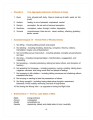
Khandha 5 Five Aggregates (elements, attributes of being)
1. Rupa form, physical self, body. Rupa is made up of earth, water, air, fire (heat)
2. Vedana feeling, is one of pleasant, unpleasant, ne
This text delves into three significant aspects of Buddhist philosophy: the Five Aggregates which consist of Rupa (form), Vedana (feeling), Samjna (perception), Sankhara (conception), and Vinnana (con
137
Exploring Meditation Techniques
Knowledge and Career
registered in one of my husband's classes in order
to learn it. He was a good teacher. But I could not
deal with the method and I gave up.
Two years later in 1998, I met another
t
The narrative shares a personal journey of exploring different meditation methods and the struggle to adapt to them. Despite initial difficulties, the individual discovers a unique method that centers
72
Velama Sutta: The Power of Good Will
The Voice of Abstaining
7. Velama Sutta
“If one were to develop even just one whiff of a heart of good will, that would be more fruitful than... if one with a confident mind were to undertake the tra
This text discusses the teachings of the Velama Sutta, emphasizing that developing even a small amount of good will is more fruitful than significant material offerings and merits. It illustrates how
92
88 Meditation Benefits
88 MEDITATION BENEFITS
Mindfulness and comprehension – Meditation can help us develop a keen sense of perception and awareness. We will become more alert and mindful of everything around. Our body an
Meditation enhances mindfulness and comprehension, fostering perception and awareness. It aligns body and mind, leading to improved focus and memory, which results in better performance in academics a
17
Insights from Luang Por: Buddha, Jesus, and Meditation
Suzanne Jeffrey
within you!"
Jon, obviously not afraid of the hard questions, asks, "Could you tell me what you think is the difference between Buddha and Jesus?"
Luang Por says, "Buddha teaches th
In this engaging discussion, Luang Por provides insights on the differences between Buddha and Jesus, emphasizing Buddha's teachings on proving everything versus Jesus' acceptance. He articulates the
58
Understanding the Elements of Body and Mind
Suzanne Jeffrey
perfectly mixed together in the body: earth, water, wind and fire. The earth element is the solid component of flesh, skin, and bone. The water element is the liquid – blood and plasm
This text discusses the four essential elements of the body—earth, water, wind, and fire—and introduces the concept of the mind as a refined, invisible entity that exists only in a living body. It exp
104
Understanding the Mind and Human Existence
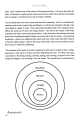
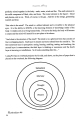
Luang Por then draws the circle within the circle that follows, regarding languages…
“As you can see, the language of the mind is far greater than any other language. And, because of this, the Buddha
Luang Por discusses the concept of the mind as a profound element that transcends language limitations. He explains how the human body, consisting of the four elements—earth, water, fire, and wind—is
21
Understanding Kilesa and Its Influence on the Mind
Kilesa is an element that soils the mind, invading it with great intensity to override the rational and, if allowed to, is ultimately the cause of mental suffering. Kilesa does not reveal its insidiou
Kilesa is an intrinsic element that corrupts the mind, causing mental suffering and overriding rationality. It acts like a hidden virus, lying dormant within the mind from birth. When viewed through D
56
Concepts in Buddhist Terminology
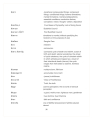
สังขาร (sankhara) compounded things; component things; conditioned things; kamma formations; mental formations; mental predispositions; essential conditions; conductive factors; conception; notion; th
Text discusses various Buddhist terms and concepts including 'สังขาร' (sankhara) which refers to conditioned things and mental formations. It details the concept of 'สังสาร' (samsara) as the cycle of
92
Understanding the Importance of the Fifth and Eight Precepts
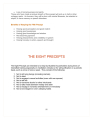
- Loss of consciousness and sanity
Those who have made a serious breach of this precept will end up in hell or other unhappy realm. As humans, they will be born with mental illnesses, be retarded or
The text discusses the severe consequences of violating the Fifth Precept in Buddhism, leading to unhappiness and potential mental disorders in future lives. It emphasizes the benefits of adhering to